
A father came in recently to talk about his six-year-old before their first session. He was thoughtful, genuinely invested – and also a little skeptical. “I get that kids need to play,” he said, “but I’m not sure how playing with toys is going to help him with what he’s going through.”
It’s a fair question. And it’s one I get some version of almost every time a family considers play therapy for the first time.
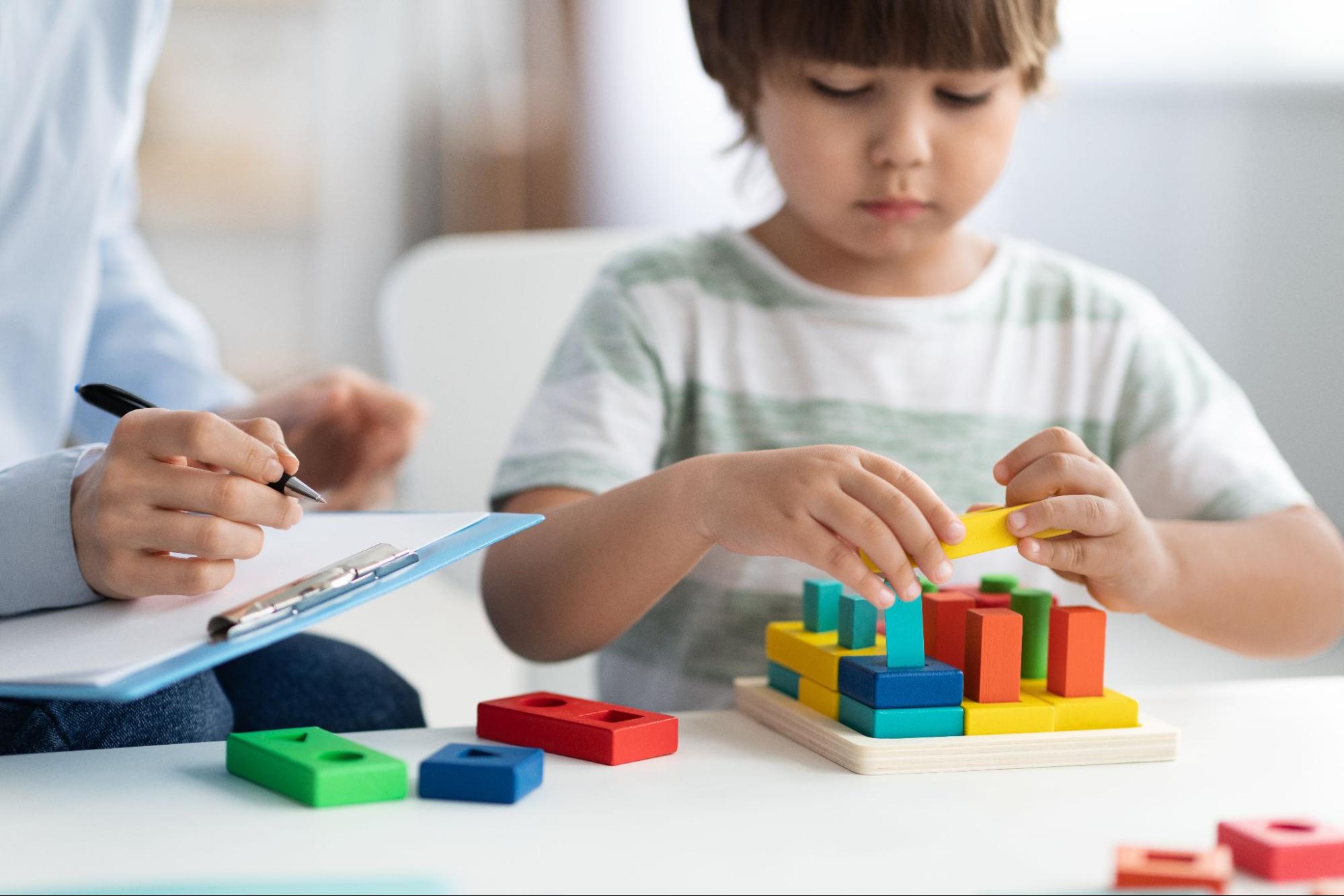
The short answer is that play is not a distraction from real work. For a child, play is the real work. It is the primary language through which children process experience, make sense of what they don’t have words for, and work through what they’re carrying. A six-year-old cannot sit across from a therapist and articulate what’s troubling them. But given the right space, they will show you – through what they choose, how they play, what they return to again and again.
Adults usually enter therapy expecting to talk about what happened and how they felt. Many children do not yet have the vocabulary or emotional distance to do that directly. Through stories, movement, drawing, imagination, and symbolic play, children can express experiences that feel too confusing or overwhelming to put into words.
This does not mean the therapist interprets every toy as a hidden message. Play therapy is not about deciding that a dragon “means” anger or a broken tower “means” family conflict. It involves careful attention to recurring themes, emotional reactions, and how the child uses the therapeutic relationship.
The advantage is not that play reveals a secret code. It is that the child no longer has to communicate only in an adult language.
Direct questions can make children feel watched or pressured. “Why are you anxious?” may be far too large a question. “Why did the bear hide when the family came home?” may be easier to explore. The feeling belongs to the character first, making it safer to approach. Over time, the child may begin by showing the fear, then naming it, and eventually recognizing it in their own life.
In the therapy room, I am often less interested in getting a child to disclose something quickly than in helping them feel safe enough that they no longer need to protect themselves from the conversation.
A space where the child is in control. Most children who come to therapy have recently experienced something that felt out of their control – a loss, a transition, a conflict, something frightening or confusing. The play therapy room is, often for the first time in a while, a space where they get to decide. What to play, how to play it, what to explore and what to leave alone. That experience of agency matters more than it might sound. It begins to rebuild something.
A relationship that doesn’t require performance. School asks children to sit still, answer correctly, manage their behaviour, and meet expectations. Home, even at its warmest, involves needs and dynamics and obligations. The therapy relationship asks none of that. It asks only that the child show up as they are. For many children – particularly those who have learned to manage how they appear to the adults around them – that experience of being fully accepted without having to perform is genuinely new. And it’s often where the most important shifts begin.
Processing without having to explain. Adults in therapy are asked to reflect, articulate, and make connections. Children don’t work that way – and asking them to is asking them to operate in a language they don’t yet have. Play therapy meets children where they actually are. The processing happens through the play, not alongside it. By the time a child can name what they were working through, they’ve often already worked through most of it.
A way for parents to understand their child more clearly. One of the things I find most valuable about this work is what it offers to parents alongside the child. Not through reporting what happened in the room – the therapy space needs to feel safe and private – but through guidance on what the child’s behaviour is communicating and how to respond in ways that help rather than escalate. The child’s play often illuminates something for the parents too, even when they’re not in the room.
The therapist does not remain outside the child’s world asking questions about it. The therapist joins the child at a pace they can manage.
How a child responds to limits, closeness, mistakes, competition, help, and shared attention can offer useful information. The child also experiences an adult who remains steady when the play becomes messy, repetitive, angry, or sad.
Some children arrive expecting adults to correct, rush, or misunderstand them. Therapy feels different when they discover they do not need the perfect words to be taken seriously.
Play therapy may be helpful when a child is struggling with anxiety, emotional regulation, behaviour changes, grief, family transitions, relationship difficulties, or experiences they cannot easily discuss. Its suitability depends on the child, the concern, and the therapist’s training. There is not a single solution for every problem.
For families in Victoria, BC, it may be time to reach out when your child’s behaviour has become their main way of communicating distress – or when conversations about what is wrong keep ending in “I don’t know.”
The purpose of play therapy is not to make a child talk before they are ready. It is to meet them in a language they already use and help new possibilities begin to appear there.
I’m Paul Cellarius, RCC, CCC, MA, a child therapist in Victoria, BC. I’m trained in Acceptance and Commitment Therapy (ACT) and Motivational Interviewing (MI), and I work with children and their families. I offer parents a complimentary 15–20-minute consultation to explore whether this kind of support might be right for their child. Even when they’re unsure about the next step, parents often leave the conversation with greater clarity.